
T: 01273 957 726 / E: [email protected]

£310m in UK wind power confirmed

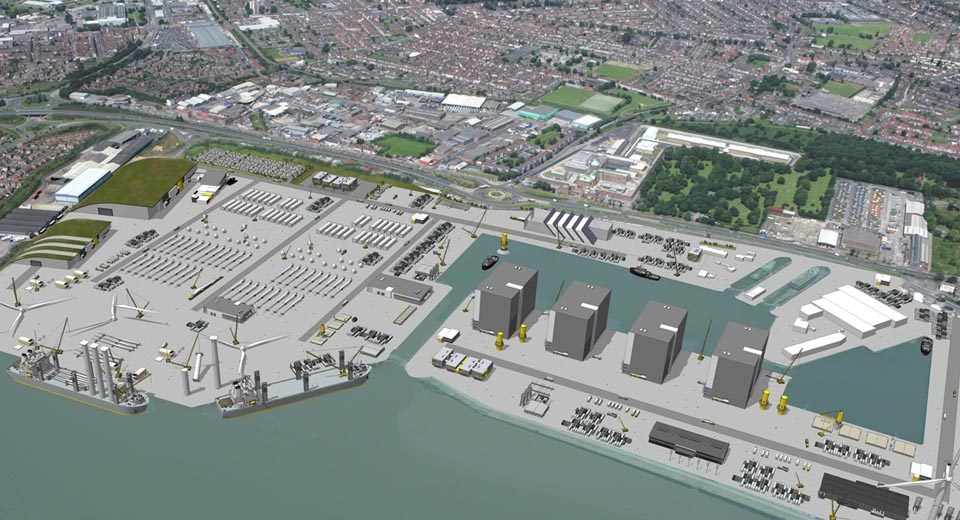
Offshore wind investment has received a major boost today from German engineering giant, Siemans. The company announced £160 million pound investment in Hull's Green-port scheme, a turbine production and installation plant. The investment is double what it had originally planned and joins the £150 million already confirmed by port operator, Associated British Ports in a deal that will create 1000 construction jobs in Hull and nearby Paull in Yorkshire. The plant will specialise in production of Siemans 6MW machines to supply Round 3 off shore farms,

Micheal Suess, managing director of Siemans tells us more;

"Our decision to construct a production facility for offshore wind turbines in England is part of our global strategy: we invest in markets with reliable conditions that can ensure that factories can work to capacity," he said. "The British energy policy creates a favourable framework for the expansion of offshore wind energy. In particular, it recognises the potential of offshore wind energy within the overall portfolio of energy production."

Secetary for state, Ed Davey added;

"This deal is excellent news for the people of Hull and the Humber, the UK, the wind industry, and our energy security," he said. "We are attracting investment by backing enterprise with better infrastructure and lower taxes. As well as helping to keep the lights on and putting more than 1,000 people in work, this deal means we will help to keep consumer bills down as we invest in home-grown green energy and reduce our reliance on foreign imports."

Like this content? Then follow us on Twitter or register for a FREE ticket for the Eco Technology Show on the 26th – 27th June, The Brighton Centre by clicking here.

Council in £113m District Heat Network Deal

Source: Public Sector Energy / Words: Jamie Hailstone

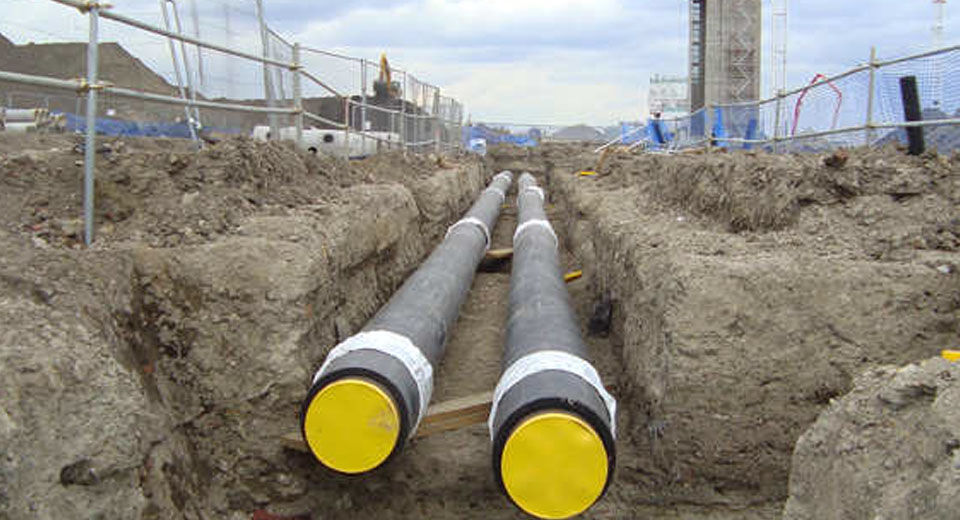
As part of the £113m Deal, the Stoke-on-Trent District Heat Network will be established. The Network will be funded by £20m from the Government and £32m from local sources.

The Network will produce up to 45 GWh a year, save 10,000 tonnes of CO2 and lower energy costs by up to 10%. It will also support more than 200 jobs directly and is the first carbon heat network system of this scale in the country.C

“We’re giving Stoke-on-Trent the freedom, power and tools to be really innovative and design whole new ways of building a stronger economy and fairer society,” said Deputy Prime Minister, Nick Clegg.

“Next generation heat and energy really does give the area one foot in the future. This City Deal puts power in the hands of local people who know best what skills are needed in the area to give it a real chance of changing the fortunes of thousands of people across Staffordshire.”

The Deal will also help establish the Smart Energy Network project at Keele University, which will test new lower-carbon energy sources. This project will receive £5m from the Government, £5m from the European Union and the same amount from the University itself.

Michael Feliks, UK Operations Manager at Cluff Geothermal and Chair of the REA’s Deep Geothermal Sector Group, said: “It is fantastic to see the Government seizing the potential of geothermal heat networks to cut costs and carbon for UK cities.

“The Government has engaged closely with industry to support geothermal in the Renewable Heat Incentive and this sector is set for growth. We hope this sets a path for other cities to follow and we continue to engage with Government to break down the barriers to geothermal energy in the UK.”

Jamie Hailstone is a freelance journalist and author, specializing in local government, transport and energy issues.

ECO OPEN HOMES EVENT LAUNCHES IN WORTHING AND STEYNING

Low Carbon Trust, Transition Towns Worthing and Steyning 10:10, in collaboration with Green Open Homes, is excited to launch the first Eco Open Homes event for Worthing and Steyning.

Over two weekends in April, various homes will be open to the public to see how you can save money on energy and water bills, whilst staying warm and comfortable and reducing your carbon footprint. With fuel costs rising and changeable weather patterns, the Eco Open Houses trail is an invaluable way to see first-hand how to make your home warmer and more comfortable.

Some of the houses are old, some are new, and many may seem quite ordinary. But what they all have in common is that the people living in them have low energy and water bills, and enjoy warm happy homes in winter. And it doesn’t necessarily take expensive renovation to cut bills: behavior changes and small alterations can make a big difference. In visiting an Eco Home you can meet householders who will share their experiences and advise on practical steps you can take.

The Worthing trail is open on the 12th-13th April and the Steyning trail on the 27th April. It is free to visit any of the houses and all are welcome. You simply need to check online if you need to book for a tour or if you can just turn up. For more see http://ecoopenhousesworthing.greenopenhomes.net/ for Worthing and http://ecoopenhousessteyning.greenopenhomes.net/ for Steyning.

5 eco build materials that will construct the future

Experts in energy conservation argue that more efficient materials will lead to lowered costs of heating and cooling a house, so the homeowner will recover that money, usually within several years. Let's take a look at some of the latest energy-efficient building materials on the market right now.

Econoblock
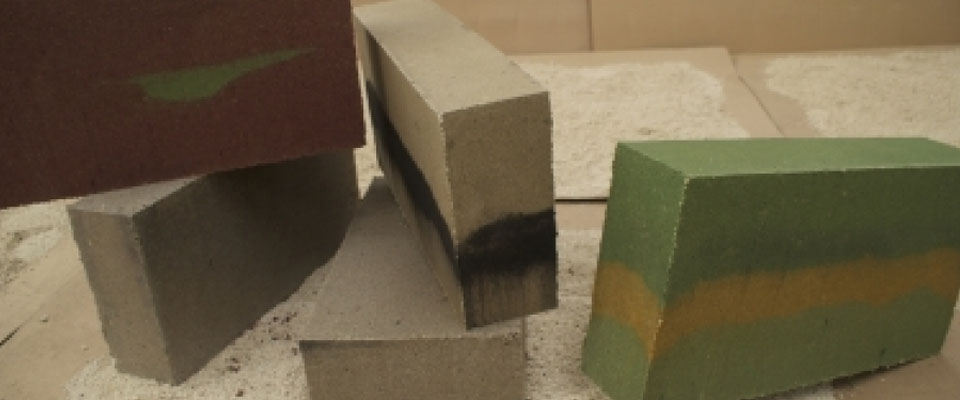
A construction breeze-block made out of waste paper and cardboard diverted from landfills. It’s a lightweight load-bearing structural block with a high thermal insulation all rolled-into-one product. Performing to the same standards as a standard concrete block, theproducts thermal and acoustic performance is actually a significant improvement compared with products currently in the global market.

The technology to make this possible is Fiber Cellulose mortar, a technology developed in the USA during the 1920's. The mixture never reached commercialisation stage due to the high cost of cellulose, although the idea was revived in the 1980s with the increment of waste paper, with several alternative groups beginning to experiment with different compositions of mixture and buildings in experimental one-off projects.

Insulating concrete forms
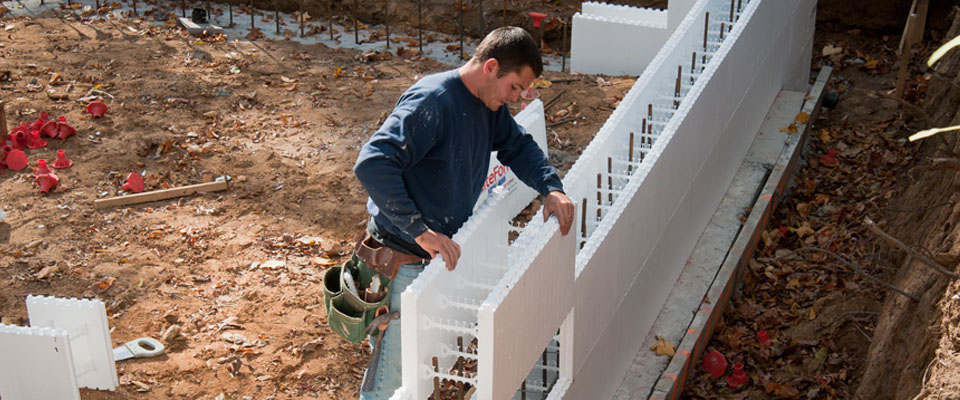
This is a 60-year-old technology that's enjoying new life with the discovery of its energy-saving properties.

The Portland Cement Association, one of the top makers of concrete forms, defines them as "cast-in-place concrete walls that are sandwiched between two layers of insulation material." Concrete is poured into forms that serve as insulation layers and remain in place as a permanent part of the structure. The technology is used in freestanding walls and building blocks.

An industry-funded study by the Massachusetts Institute of Technology issued a report in late 2010 that said buildings made from insulated concrete forms saved 20 percent over the energy consumed by wood-frame buildings in cold climates such as Chicago [source:Ochsendorf].

Plant based polyurethane rigid foam
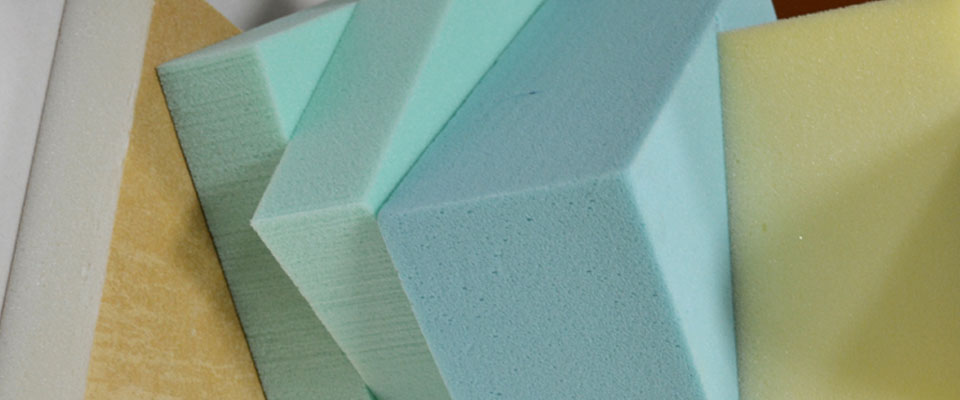
After the No. 1 maker of surfboard material went out of business and was fined by the Environmental Protection Agency for using a toxic chemical, a surfboard maker in San Diego started producing a foam material that comes from plants.

Ned McMahon, chief operating officer of Malama Composites, is manufacturing the foam from materials such as bamboo, hemp and kelp.

The so-called rigid foam is used in insulation, wind turbine blades, furniture and, of course, surfboards.

When used as insulation, the foam offers high moisture and heat resistance, excellent acoustics and protection against mold and pests. It also has a higher R-value than fiberglass or polystyrene, meaning that it has a higher thermal resistance and insulates better [source: Malama Composites].

Low-E windows
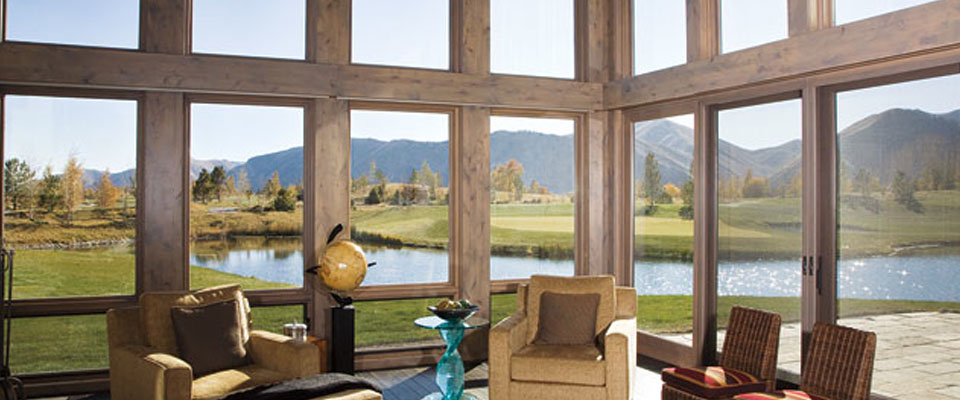
The "E" in low-E stands for emissivity, and a clear coating of metallic oxide on these windows keeps the heat inside the house in the winter and outside in the summer.

Typically, this coating is used on external storm windows in houses that don't have double-pane windows. The technology comes in soft coatings and hard coatings. The soft coatings go between layers of glass, while the hard coatings go on the outside.

Low-E windows typically cost between $60 and $110 each. That's 10 to 15 percent more than clear glass storm windows, but they definitely have benefits: They can reduce heat flow through the glass by half, and that will help reduce heating costs by 10 to 20 percent [source: NAHB Research Center].

Earth

If you want to build with walls of rammed earth or adobe, the great advantage is that the material is abundant, free and doesn't have to be transported to the job site. The downside is that you'll have a hard time finding specialized craftsmen who know how to build with dirt.

Countries including China, Peru and New Zealand actually account for this type of building in their codes, but the United States has not established codes for building from the earth. The difficulty of finding craftsmen who can do the job led the National Association of Home Builders to estimate that costs for labor could run at least $80 per square foot.

Even so, researchers at the association note that earthen walls provide excellent thermal mass, and the material comes from the ultimate in renewable sources.

Like this content? Then follow us on Twitter or register for a FREE ticket for the Eco Technology Show on the 26th – 27th June, The Brighton Centre by clicking here.

World’s largest sovereign wealth fund will invest in renewables

Source: Trillion Fund / Words: Rebecca Cooke

The largest sovereign wealth fund in the world has pledged to invest more in renewable energy technology.

Erna Solberg, Norway's Prime Minister has said that the Norwegian sovereign wealth fund would be increasing its investment in clean energy as part of a move to combat climate change using its immense capital.

The move could have a global impact on the energy industry. The decision means that a renewable energy investment mandate will be created. The full details of the investment will be announced on April 4 by Norway's Finance Minister.

The fund currently has 9 per cent of its holdings in the traditional coal, oil and gas industries and owns the equivalent of 1 per cent of the world's stocks. However the move to invest more in renewables signifies a move towards divestment from fossil fuels and could resonate throughout the global investment community.

The move towards divestment could be a reaction to pressure from campaign groups to prioritise renewable energy over fossil fuels. The World Wildlife Fund has headed up a campaign calling for financial institutions and funds to take the ethical impacts of their investments into account and plough more funding into clean energy.

In response to the news, Nina Jensen, CEO of WWF-Norway, said: If done at scale this will have global impact and redefine how we use money consistently with commitments to limit climate change. The pension fund is the largest state investor in the world. A solid renewable energy mandate will send a tremendously powerful signal and set the standard for other international investors.”

The news comes weeks after an alliance of 17 major funds pledged to divest $2 billion from fossil fuels and re-invest into clean energy. The divestment movement has been gathering traction in recent months and this latest decision by Norway's sovereign wealth fund is expected to encourage other financial institutions to follow suit.

Like this content? Then follow us on Twitter or register for a FREE ticket for the Eco Technology Show on the 26th – 27th June, The Brighton Centre by clicking here.
Facebook

Newsletter Signup

Be the first to know by signing up to our event updates.

* indicates required