


T: 01273 957 726 / E: [email protected]

UK's First Truly Sustainable Suburb

Source: Architects Datafile

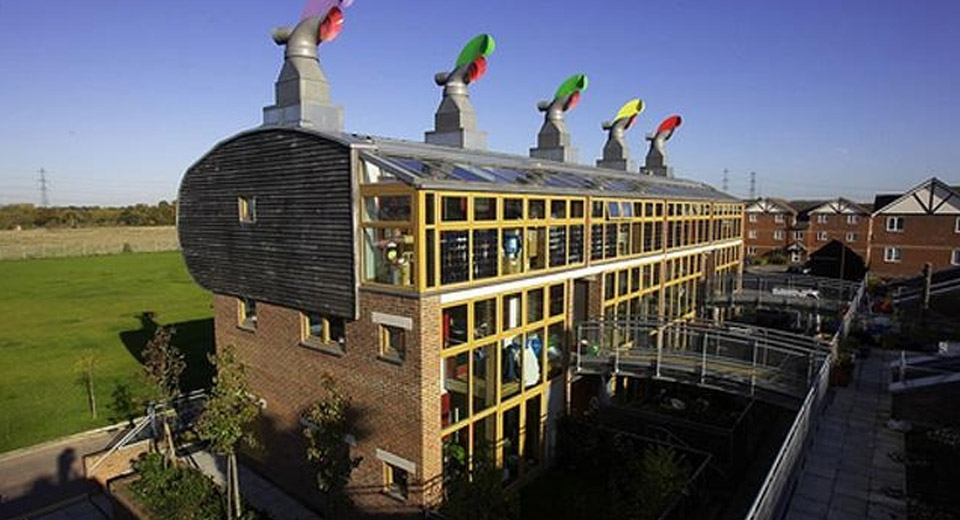
Planning has been granted for a progressive masterplan, designed by Assael Architecture, to regenerate a key site in Hackbridge, Sutton. The scheme by City & Provincial Properties will provide a new, fully sustainable neighbourhood for living and working. It features 124 residential units (98 family houses and 26 apartments), an innovation centre designed by Oxford Architects plus extensive landscaping and public open space.

The scheme will form part of the ‘One Planet Sutton’ plan, a large-scale programme of development and refurbishment, which will ultimately transform Hackbridge into a sustainable suburb. This development will continue to build on the precedent set by the Beddington Zero Energy Development (BedZED) and widen the range of green and sustainable living within Hackbridge, to include family housing as well as flats.

Wandle Riverside will include 124 high quality, green residential units carefully designed to open up and maximise views of the river. All units have been designed to meet level four of the Code for Sustainable Homes. They will include: solar panels, low energy light fittings, a wind catcher for natural ventilation, acoustic insulation, composting and wormery, cycle storage, water butt and external recycling. Pedestrian and cycle routes are provided throughout the site together with a new generous public riverside walkway.

The family houses will be centred around west facing communal landscaped gardens overlooking the river. These gardens are to be managed by the residents creating a real sense of community.

The Wandle Innovation Centre, designed by Oxford Architects, retains the listed villa on the site with additional new business units designed with photovoltaics and green roofs. The derelict warehouses on the island site will be demolished making way for a new public park with a cycle path linking together the Wandle Trail.

Connectivity has also been a focus throughout the design with improved cycle and pedestrian routes and a new bridge, which will connect the innovation centre and Riverside site across the river.

Greg Greasley, Director, Assael Architecture, said:

“This is an exciting development that will help make Hackbridge a truly low carbon and sustainable suburb. Our design sets out to create a high quality, new development that will provide a fully sustainable neighbourhood for living and working, maximising the riverside setting throughout.”

Like this content? Then follow us on Twitter or register for a FREE ticket for the Eco Technology Show on the 26th – 27th June, The Brighton Centre by clicking here.

One of the most violent cities in the World transformed through design

Source: House Builder & Developer

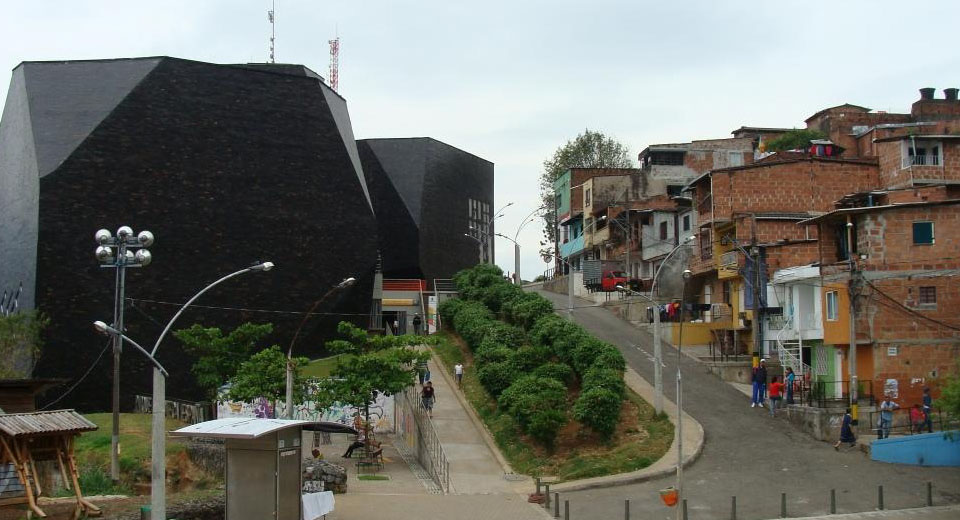
In 1991, Medellin was considered to be the most violent city in the world with almost 20 people being shot every day, and one of the five most corrupt cities of Colombia in the year 2003. Society was marked by violence and a strong sense of inequality. The social classes were very established and the neighbourhoods were not united, rather they were separated according to social levels that divided the population.

In the past years, Medellin has carried out social integration policies with the purpose of reducing violence and forming an inclusive city. An urban lab where they had special care with the quality of public buildings and the design of public spaces. In the words of Jorge Melguiso – one of the central players of the city’s transformation

the words that defined Medellin were drug trafficking and violence; today they are transformation, optimism, modernization, coexistence, education, culture”.

During the past years public infrastructure have been developed to connect the territory’s peripheral neighbourhoods. Pedestrian bridges have been built as well as the iconic “metrocable”, bus routes and soon incorporating a Tram. The most successful intervention were the public facilities in the city. New projects of all scales have taken over public spaces and now also act as meeting spots for the population.

The local government believes education and culture are key factors in the city’s transformation. Having taken these elements into account, the city has progressed considerably, but continues to grow and improve constantly. Nowadays Medellin is an important reference in architecture around the world, and is a perfect example of what is known as social urbanism.

Every year the population of Medellin grows by about 30,000 due to a flow of people from the countryside and into the city. These people usually settle in self-built houses on the mountainside, expanding the city limits in an informal and uncontrolled manner. To relocate a part of this growing population, a contest of ideas in the matter of housing has been designed.

ARCHmedium propose to regenerate the city through a hybridisation of uses in the historic downtown area. Currently, the center of the city is mostly given tertiary use (office buildings and commerce). This project revolves around implementing new residential use and reformulating the adjacent public spaces in a way that includes housing.

The contest forms part of “Piso Piloto” exhibit, which studies possible solutions that guarantee housing in the city. Two exhibits will be put together, one in the CCCB Center of Contemporary Culture of Barcelona and the other in the Antioquia Museum in Medellin. The final objective is the construction of a pilot neighbourhood based on this research.

Three Olympic swimming pools of water used every minute by power stations

Source: Trillion Fund / Words: Rebecca Cooke

Traditional power stations use a gargantuan amount of water to generate power, a new report from the European Wind Energy Association (EWEA) has found.

The report calls on the Government to take into consideration the water that is being used when debating and setting climate change and energy policy and to favour advancements in wind technology in order to save water being wasted.

The EWEA’s report: “Saving Water with Wind Energy” says nuclear, coal and gas-fired power stations in Europe use a mammoth 4.5 billion cubic meters of water a year, which is mainly used for cooling purposes.

This is equivalent to three Olympic-sized swimming pools being consumed every minute globally. It is also roughly the amount of water used by 82 million EU citizens annually. Energy production accounts for 44 per cent of the EU’s total water use, way ahead of agriculture at 24 per cent, the public water supply at 21 per cent and industry which accounts for 11 per cent.

With hosepipe bans being introduced across Britain in recent years due to water shortages, the study warns that such plants only exacerbate Europe’s water scarcity, whereas energy produced from wind turbines requires hardly any water to generate clean electricity. The EWEA is urging European state officials who are meeting on March 20 and 21 to take this into account when they formulate energy and climate change policies.

RenewableUK’s director of external affairs, Jennifer Webber, said:

“Water is a very precious resource – water restrictions were imposed in the UK in the summer of 2012 in areas hit by drought. One of the many benefits of wind energy is that it requires hardly any water to keep generating. This report is a timely reminder of the environmental impact of other technologies which use vast amounts of water for cooling. When Governments set energy policy, they should take this into account – it’s not just the carbon footprint that matters, but also the water swallowed up by these other thirsty generators”.

Like this content? Then follow us on Twitter or register for a FREE ticket for the Eco Technology Show on the 26th – 27th June, The Brighton Centre by clicking here.

80 per cent of devs concerned about raising finance in 2014

Source: House Builders Online

According to latest research from Regentsmead; a leading lender of development finance, 80% of developers in the UK have concerns about raising finance for various projects over the next twelve months. The research is supported by a recent housebuilding survey from Knight Frank which revealed that many developers are experiencing little improvement in bank lending and would like the Government to apply more pressure on banks to lend to small businesses.

In an effort to allay some of the existing concerns over gaining timely and efficient access to a bespoke level of finance, Regentsmead has announced its intention to host a specialist seminar on Thursday 27th March at The St Botolph Building in London’s Houndsditch. The seminar will provide developers with some inside information on all areas of property development including access to finance, planning and architectural issues, as well as warranty provision.

Commenting on the launch of the event, ‘The One Stop Developer Shop’, James Bloom, CEO of Regentsmead says:

‘As the lender of choice for 4 out of 5 developers, we want to address some of the concerns circulating in the industry regarding gaining access to finance. The event aims to shed light on some of the most common pitfalls associated with financing various projects and provides developers with an open forum to ask questions to our panel of experts on a variety of issues from planning to warranty provision. Bank finance is still difficult to obtain and typically can take several months. We can deliver ‘in principle’ offers within minutes, often after just one phone call. We can also promise speed, flexibility and reliability that comes with a personal level of service you wouldn’t expect from any other lender.’
- See more at: http://www.hbdonline.co.uk/news/80-per-cent-of-uk-developers-are-concerned-about-raising-finance-this-year/#sthash.NC6ltob1.dpuf

Like this content? Then follow us on Twitter or register for a FREE ticket for the Eco Technology Show on the 26th – 27th June, The Brighton Centre by clicking here.

Time to get started as BIM approaches

Source: Architects Datafile

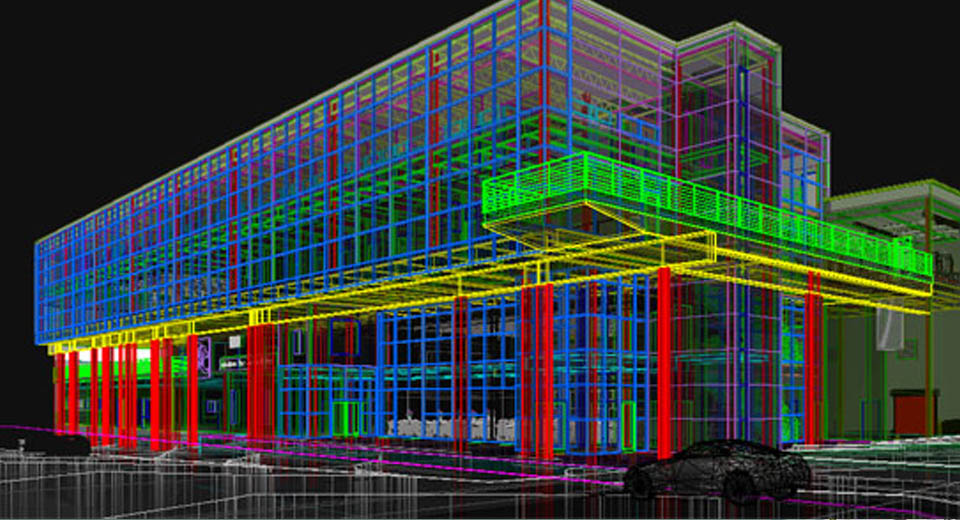
The UK government’s chief construction advisor has characterised building information modelling (BIM) as unstoppable. The increasing public sector client participation, coupled with the looming 2016 deadline has heightened the profile of BIM with SMEs. It is no longer a case of whether the construction industry will adopt BIM, but how.

The National Federation of Builders (NFB), with the support of the Construction Industry Training Board (CITB), has been driving the adoption of BIM with SME contractors and companies working within the sector since the Construction Strategy of 2011 identified it as an enabler to improve the efficiency across the industry.

Following on from its two previous projects: BIM: Early Adopters Programme and BIM: Let’s get ready, the NFB has now launched its latest programme of support: BIM: Build & Sustain. Taking the experiences gained and the lessons learned from its earlier projects, the NFB’s latest programme takes a strategic and holistic approach enabling effective BIM adoption to be achieved at whatever stage of the journey companies are currently at.

NFB Training Manager, Karen Dawes, says:

“BIM: Build & Sustain has been developed specifically for tier 1 SMEs and their supply chains. This unique project will enable companies to benefit from a holistic BIM support package that will take them through awareness to implementation with a consistent step by step approach. ”

The programme is being launched at complimentary workshops across England and Wales. Dates and venues include:

  • London 8th April 2014
  • Bridgend 10th April 2014
  • Carlisle 29th April 2014
  • Nottingham 30th April 2014
  • Durham 6th May 2014
  • Ispwich 7th May 2014

These interactive workshops have been developed to build awareness and provide practical support to SME construction companies seeking to comply with the central government mandate of BIM level 2 by 2016.

For further information on the NFB BIM: Build & Sustain project, or to book a place on any of the workshops above please contact the Training Team on 0845 057 0041.

Like this content? Then follow us on Twitter or register for a FREE ticket for the Eco Technology Show on the 26th – 27th June, The Brighton Centre by clicking here.

Facebook

Newsletter Signup

Be the first to know by signing up to our event updates.

* indicates required