





Big debate on resource stewardship
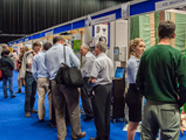
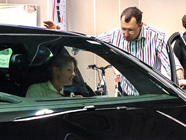
Brighton’s Eco-Technology Show is fast rising up the list of must-do events for anyone in the resource stewardship arena. Aimed particularly at local authority thinkers, doers and buyers, it showcases green transport solutions, all the latest building technologies, and renewable energy from off-grid to big kit. Material efficiency is a growing strand, and this year Green Alliance will host a ‘Big Debate’ at the centre of the show – a panel discussion on Circular Economy.
The impetus for this discussion came from work the Resource Stewardship team and the Circular Economy Task Force at Green Alliance has been spearheading with the Technology Strategy Board. Excited by scientific advances in materials and processes, but concerned about how far some of these are designed to subscribe to Circular Economy principles, we held a meeting in January to explore the opportunities and challenges of developments in High Value Manufacturing (HVM).
HVM is a ‘catapult’ under the Technology Strategy Board. This means that it is an area of economic and technological activity seen as key to the UK’s future prosperity, and it is crucial to support it along the rocky road from lab to market. This is done by funding centres that act as test beds for participating companies, as well as competitions for research and development grants. HVM covers some of our flagship industries – aerospace, defence, automotive – and involves some of our best known companies (Rolls Royce) to some of the smallest, most entrepreneurial SMEs.
The materials of interest to us are those with great new properties in terms of being strong, flexible and light, but where it is not clear how easily they can be recovered at the end of life (or rather end of first life). So carbon-fibre composite materials, for instance, hugely useful to reduce the weight of aircraft and cars and so lower their carbon footprint, are very difficult to recycle on present technology. We may decide that their advantages mean that this doesn’t matter, but that rather depends on knowing what scale of unrecoverable materials we might be looking at in future. If these materials have use only in very specialist applications, the tonnage might be small, but if they spread into mainstream use (as with cars, or even used in household appliances), they could become a significant waste stream.
Even if tonnage is small, we might want to decide that recoverability (options for re-use, remanufacturing and recycling) are important goals to pursue. Marrying up light-weighting, say, with recyclability, might open up new technological and business opportunities in itself. We were extremely pleased that one outcome of the Green Alliance meeting was the inclusion of Circular Economy language in the aims of a High Value Manufacturing grant competition on light-weighting.
So how does that get us to Brighton? The materials used to give environmental advantage in construction and transport need to be seen through the Circular Economy lens as much as through the low-carbon lens. Those coming to Brighton to understand what their buildings and car fleets might look like in the future, will want to know what end of life options are available, and may well want a say in how far these considerations are weighed up, and maybe traded off, against each other. At the moment, we are concerned about new composites and other ways of fusing materials together such as in additive manufacturing (3d printing). In future, it could be nano-scale coatings to materials, and more products that are based on biological materials and processes. All of them need a conscious assessment for their ‘circular’ potential.
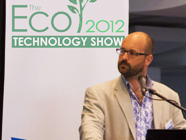
The Brighton session features Gareth Brown from WRAP talking about resource efficiency in construction, and the importance of keeping an eye on future materials, and Nick Powell from Ricardo, an expert in low carbon vehicles. They are joined by David Greenfield, who has explored the opportunities for recovering IT equipment for many years, and is keen that other sectors learn the lessons of taking complex products from being badly-designed landfill fodder to super-high-tech circular systems.
We hope that the visitors at the Brighton show will take on the role of intelligent clients and start to ask these questions in a seamless fashion. If there is one common, clear, clarion message from the work of the Circular Economy Task Force, as well as the Ellen MacArthur Foundation, and the RSA’s Great Recovery Project, it is this – get the design right from the very start.
Julie Hill Chair, Circular Economy Task Force Green Alliance